

What Is Medicare and Why It Matters
Medicare is a federal health insurance program in the United States designed primarily for people age 65 and older. It also helps certain younger individuals who have disabilities or specific medical conditions.
Created in 1965, Medicare provides health coverage to millions of Americans. It ensures older adults and eligible individuals can access hospital care, doctor visits, preventive services, and prescription medications without facing overwhelming medical bills.
Understanding how Medicare works can feel confusing at first. There are multiple parts, different enrollment periods, and various coverage options. But don’t worry—we’ll break it all down step by step so it’s simple and clear.
Medicare Resources
Learn everything you need to know about Medicare through our extensive collection of articles:
Who Qualifies for Medicare?

Age-Based Eligibility
Most people qualify for Medicare when they turn 65. If you or your spouse worked and paid Medicare taxes for at least 10 years, you may qualify for premium-free Part A coverage.
Even if you didn’t work long enough, you can still enroll—you may just have to pay a monthly premium.
Disability and Special Conditions
Some people under 65 qualify for Medicare if they:
-
Receive Social Security Disability Insurance (SSDI) for 24 months
-
Have End-Stage Renal Disease (ESRD)
-
Have Amyotrophic Lateral Sclerosis (ALS)
Medicare isn’t only for retirees. It also serves people facing serious medical conditions earlier in life.
What are the Different Parts of Medicare?

Medicare is divided into several “parts.” Each one covers different types of health services.
Medicare Part A: Hospital Insurance
Part A helps pay for:
-
Inpatient hospital stays
-
Skilled nursing facility care
-
Hospice care
-
Certain home health services
Most people don’t pay a monthly premium for Part A if they worked and paid Medicare taxes long enough.
➡️Browse our Medicare Part A resources.
Medicare Part B: Medical Insurance
Medicare Part B covers:
-
Doctor visits
-
Outpatient services
-
Preventive services like screenings and vaccines
-
Durable medical equipment (wheelchairs, walkers, hospital beds)
-
Certain home health care services
Unlike Part A, Part B usually requires a monthly premium.
➡️Browse our Medicare Part B resources.
Medicare Advantage (Also Known as Part C)
Medicare Advantage is offered by private insurance companies approved by Medicare. These plans:
-
Bundle Part A and Part B
-
Usually include Part D
-
May offer extra benefits like vision, dental, or hearing coverage
-
Often require you to use doctors within a network
You may also pay an additional premium depending on the plan.
➡️Browse our Medicare Advantage resources.
Medicare Part D: Prescription Drug Coverage
Medicare Part D helps cover prescription medications, including many recommended vaccines.
You can enroll in a standalone drug plan alongside Original Medicare or choose a Medicare Advantage plan that includes drug coverage. These plans are offered by private insurance companies but must follow federal Medicare rules.
➡️Browse our Medicare Part D resources.
Medicare Supplement (Also Known as Medigap)
Medigap policies are sold by private companies help cover out-of-pocket costs in Original Medicare, such as:
-
Deductibles
-
Coinsurance
-
Copayments
➡️Browse our Medicare Supplement (Medigap) resources.
What Does Medicare Cover?

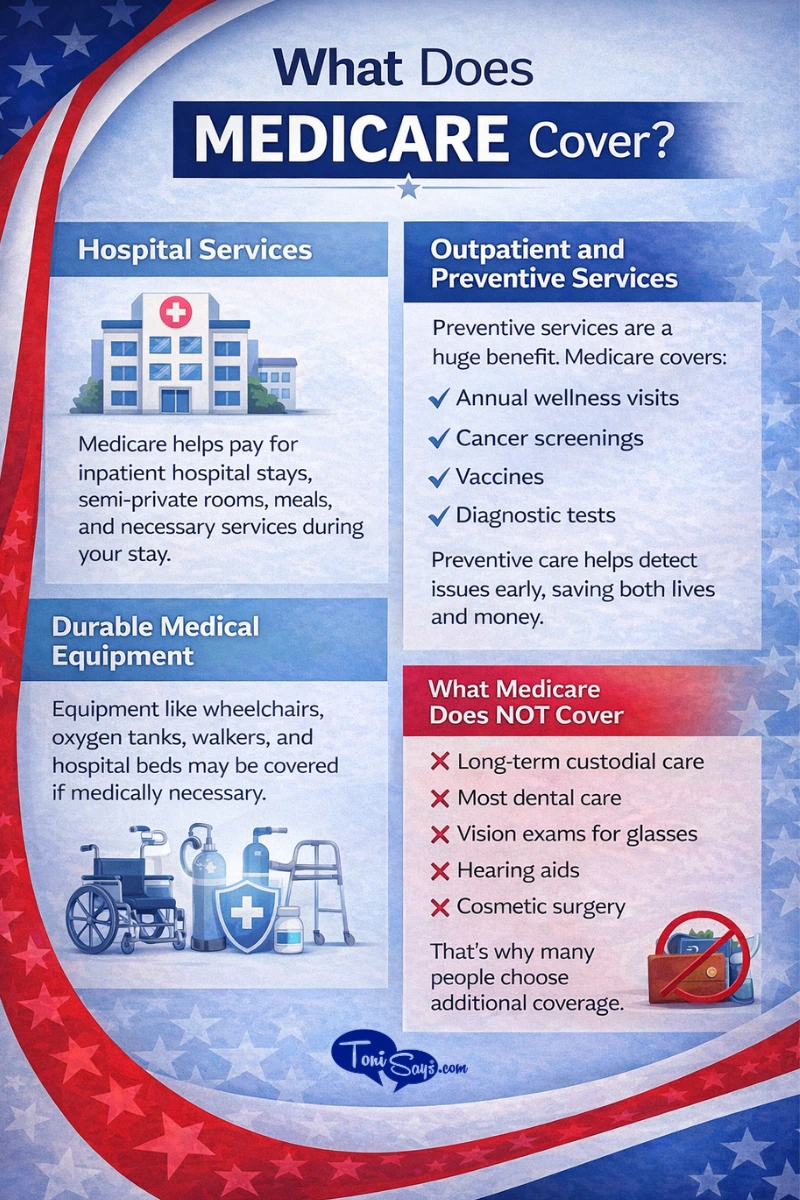
Hospital Services
Medicare helps pay for inpatient hospital stays, semi-private rooms, meals, and necessary services during your stay.
Outpatient and Preventive Services
Preventive services are a huge benefit. Medicare covers:
-
Annual wellness visits
-
Cancer screenings
-
Vaccines
-
Diagnostic tests
Preventive care helps detect issues early, saving both lives and money.
Durable Medical Equipment
Equipment like wheelchairs, oxygen tanks, walkers, and hospital beds may be covered if medically necessary.
What Medicare Does NOT Cover

Medicare generally does not cover:
-
Long-term custodial care
-
Most dental care
-
Vision exams for glasses
-
Hearing aids
-
Cosmetic surgery
That’s why many people choose additional coverage.
How Much Does Medicare Cost in 2026?

Medicare costs depend on your work history, income, and whether you choose Original Medicare or a private plan. Here’s a breakdown of the numbers for 2026.
Medicare Part A (Hospital Insurance) 2026 Costs
Part A covers inpatient hospital stays, skilled nursing facility care, hospice, and some home health care.
Monthly premium
-
$0 for most people (generally if you worked and paid Medicare taxes for 40+ quarters / about 10 years)
-
$311/month if you have 30–39 quarters of work
-
$565/month if you have fewer than 30 quarters
Inpatient hospital costs (per benefit period)
-
Deductible: $1,736
-
Days 1–60: $0/day (after deductible)
-
Days 61–90: $434/day
-
Days 91–150 (lifetime reserve days): $868/day
Medicare Part B (Medical Insurance) 2026 Costs
Part B covers doctor visits, outpatient care, preventive services, durable medical equipment, and more. Many people have the premium deducted from Social Security.
-
Standard monthly premium (2026): $202.90 (up $17.90 from 2025)
-
Annual deductible (2026): $283 (up $26 from 2025)
-
After you meet the deductible, you typically pay 20% coinsurance for many Part B services (assuming providers accept Medicare-approved amounts).
Medicare Part D (Prescription Drug Coverage) 2026 Limits
Part D costs vary by plan and insurer, but Medicare sets key limits:
-
Maximum annual deductible: cannot exceed $615
-
Out-of-pocket cap: $2,100 for covered drugs — once you hit it, you pay $0 for covered Part D drugs for the rest of 2026
Medicare Advantage (Part C) 2026 Premiums
Medicare Advantage (Part C) plan costs vary widely by county and insurer, but CMS projects:
-
Average Part D premium within Advantage plans that include drug coverage: ~ $11.50/month in 2026 (this is an average; many plans are $0 premium, and some are higher).
High-Income Adjustments (IRMAA) for 2026
If your 2024 modified adjusted gross income (MAGI) is above certain limits, you’ll pay an IRMAA (Income-Related Monthly Adjustment Amount) surcharge on top of your standard premiums.
Part B: Total monthly premium in 2026 (standard premium + IRMAA)
| 2024 Individual MAGI | Total monthly Part B premium (2026) |
|---|---|
| $109,000 or less | $202.90 |
| $109,001–$137,000 | $284.10 |
| $137,001–$171,000 | $405.80 |
| $171,001–$205,000 | $527.50 |
| $205,001–$499,999 | $649.20 |
| $500,000 or more | $689.90 |
Part D: Monthly IRMAA surcharge in 2026 (added to your plan premium)
| 2024 Individual MAGI | Part D IRMAA surcharge (monthly) |
|---|---|
| $109,000 or less | $0.00 |
| $109,001–$137,000 | $14.50 |
| $137,001–$171,000 | $37.50 |
| $171,001–$205,000 | $60.40 |
| $205,001–$499,999 | $83.30 |
| $500,000 or more | $91.00 |
For married couples filing jointly, the income thresholds are generally doubled (for example, the first bracket ends at $218,000).
Deductibles and Coinsurance
Remember, even with premiums, Medicare often includes:
-
Deductibles (like the Part A hospital deductible and the Part B annual deductible)
-
Coinsurance (commonly 20% for many Part B services after the deductible)
That’s why many people consider Medigap (to lower out-of-pocket costs with Original Medicare) or choose a Medicare Advantage plan with different copays and an annual out-of-pocket maximum.
When and How to Enroll in Medicare
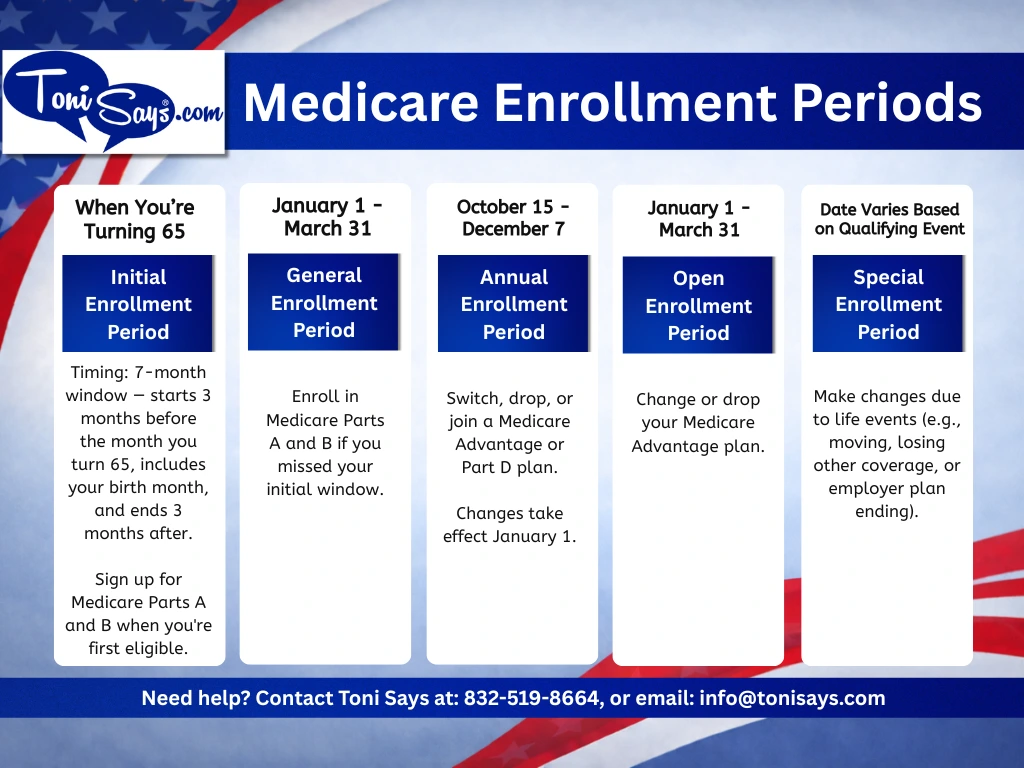
You can enroll in Medicare:
-
Three months before turning 65
-
During your birthday month
-
Three months after turning 65
There are also Annual Enrollment Periods each fall where you can switch plans.
Missing enrollment deadlines may result in penalties, so timing matters.
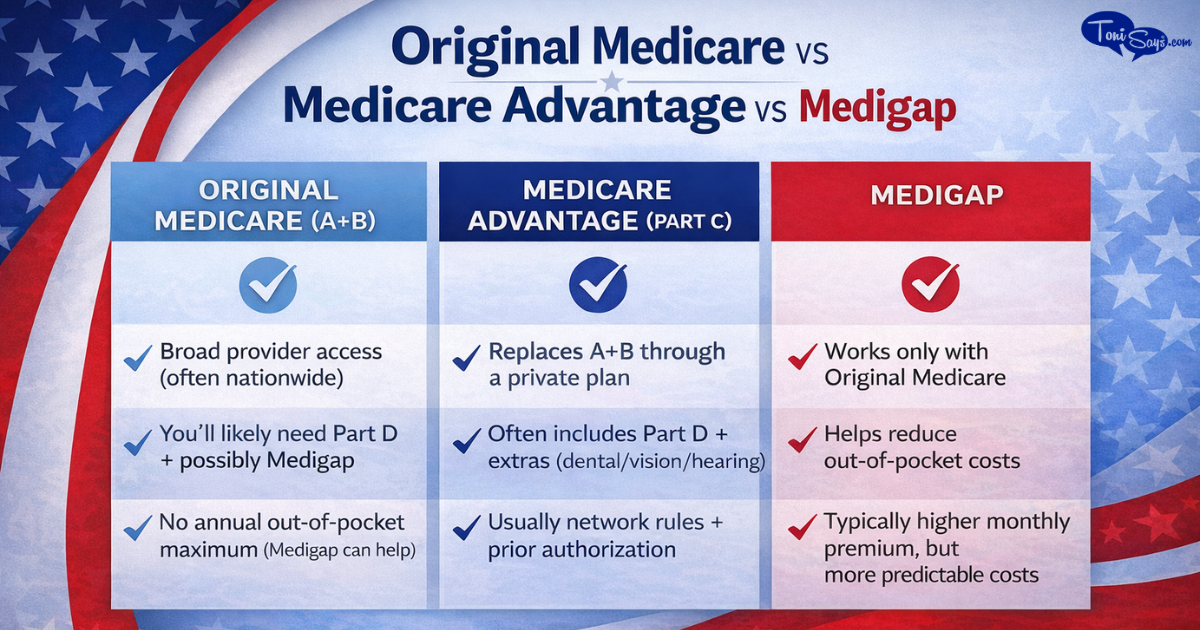
Original Medicare, Medicare Advantage, & Medigap: What’s the Difference?
Frequently Asked Questions
1. What is Medicare and who pays for it?
Medicare is funded through payroll taxes, premiums, and federal government funding.
2. Is Medicare free at age 65?
Part A may be free if you paid Medicare taxes long enough, but Part B requires a monthly premium.
3. Can I have both Medicare and Medicaid?
Yes, some people qualify for both programs.
4. Do I need Part D if I don’t take medications?
You may still want it to avoid future late enrollment penalties.
5. Does Medicare cover dental and vision?
Original Medicare generally does not, but some Medicare Advantage plans may offer limited benefits.
6. Can I change my Medicare plan later?
Yes, during the Annual Enrollment Period.
Making the Right Medicare Choice
Medicare provides essential health insurance for millions of Americans, offering hospital care, medical services, prescription drug coverage, and preventive benefits.
Whether you choose Original Medicare with supplemental coverage or a bundled Medicare Advantage plan, the key is to compare your options carefully. Think about your doctors, medications, budget, and long-term health needs.
Need Help?
As Toni always says: “When it comes to Medicare, what you don’t know WILL hurt you.” And that’s especially true when costs can change based on your income, enrollment timing, and the type of coverage you choose.
That’s why it helps to have the Toni Says team walk you through your options step by step—so you understand what you’re paying for, what you’re not covered for, and how to avoid mistakes that can lead to lifelong penalties or unexpected out-of-pocket costs. Medicare may seem complex at first, but once you break it down, it becomes manageable. And with the right knowledge (and the right guidance), you’ll be ready to make a choice that protects both your health and your financial future.
Medicare Resources
Learn everything you need to know about Medicare through our extensive collection of articles: